Emergency Cash Without the Debt Trap:
How PTO Can Offer a Financial Safety Net
Over the past 20 years working in the employee benefits space, I’ve sat in a lot of retirement plan committee meetings, held hundreds of retirement plan enrollment meetings, and talked with thousands of HR leaders. One pattern shows up every time.
When an employee hits a financial emergency, they don’t reach for the best option. They reach for the fastest one.
A blown transmission, a surprise medical bill, a last-minute flight home because a parent is sick. For most American workers, the question isn’t whether one of these will happen. It’s how they’ll pay for it when it does.
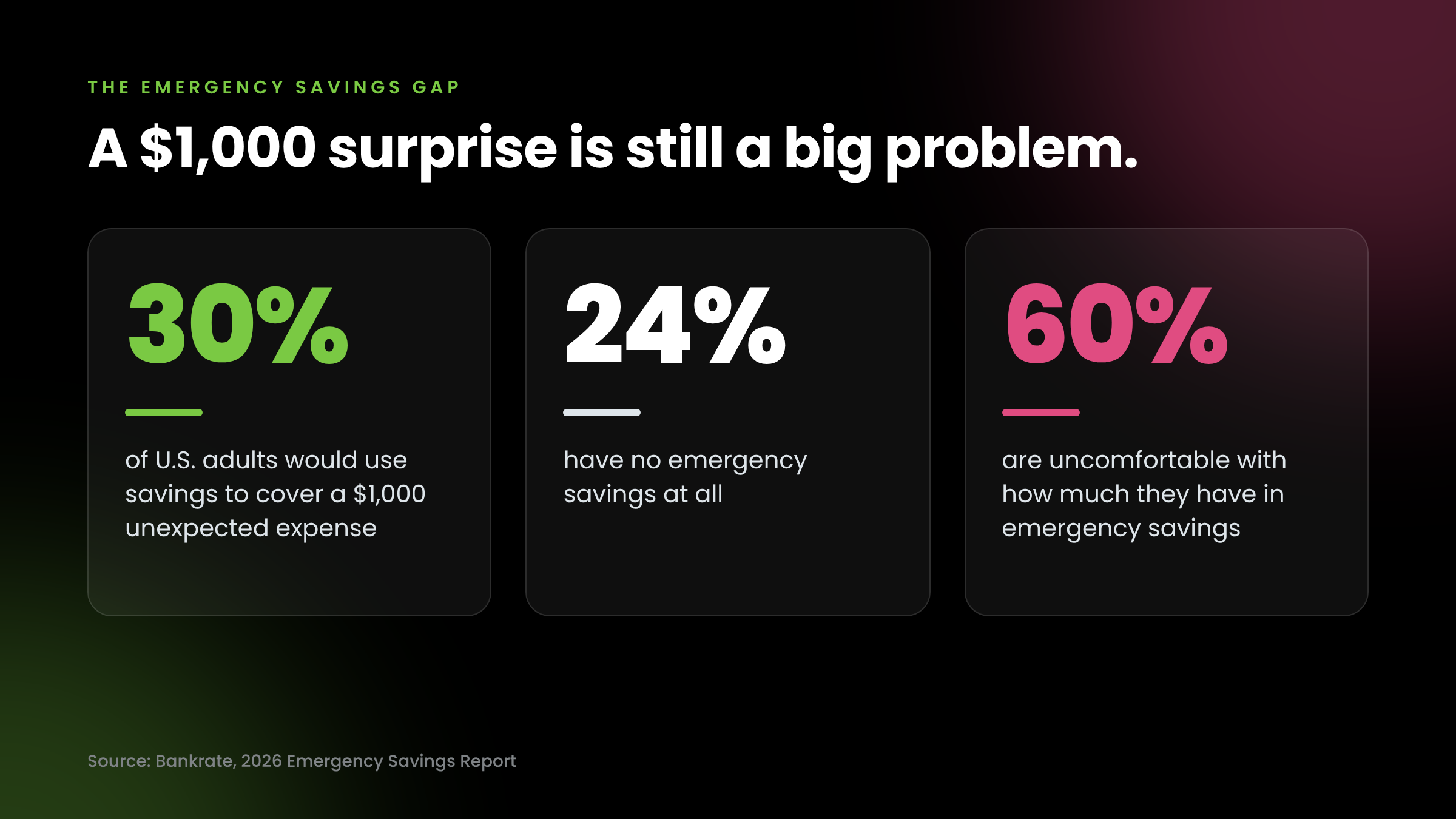
The data backs up what I’ve seen firsthand. According to Bankrate’s 2026 Emergency Savings Report, only 30% of U.S. adults say they would use savings to cover a $1,000 surprise expense. Nearly a quarter (24%) have no emergency savings at all, and 60% are uncomfortable with how much they have set aside.
I watched the 401k turn into an emergency fund
When I started in this industry in 2006, a hardship withdrawal was rare. Plan sponsors saw a handful a year, and each one felt like an exception. That’s no longer the case. Vanguard reported that 6% of participants in its plans took a hardship withdrawal in 2025. That’s up from 4.8% in 2024 and roughly triple the pre-pandemic rate of about 2%. It was the sixth straight annual increase, and the median withdrawal was $1,900.
The $1,900 is the part that gets me. It isn’t a down payment on a house. It’s a car repair or a past-due bill. And for a worker under 59½, that $1,900 is taxed as income and usually hit with a 10% penalty, which means they must pull out even more to net what they need. Then it’s gone, along with decades of compounding. A 401(k) loan avoids the immediate tax hit, but I’ve seen plenty of loans default when someone changes jobs and the balance comes due.
For most of my career, the industry’s answer was “save more” and “provide more and better education.” Those matter. But you can’t educate yourself out of a $1,000 problem that needs to be solved by Friday.

The other options can carry high costs
Payday loans. The CFPB notes that a typical two-week payday loan charging $15 per $100 borrowed works out to an APR of almost 400%. Rollovers stack new fees on top of old ones.
Earned wage access (EWA). EWA is sold as the friendly alternative, and I understand the appeal. But a study highlighted by the Center for Responsible Lending found that users stuck in a borrowing cycle paid the equivalent of about a 383% APR. Frequent users paid roughly $421 in loan and overdraft fees in their first year, and borrowing roughly doubled after the first advance. My issue with EWA is simple: it doesn’t create any new money. It moves next week’s paycheck into this week, and next week the same hole is waiting.
The asset nobody was talking about
When I came to PTO Exchange nearly five years ago, this was the part that clicked for me. For two decades I’d been looking at the retirement plan as the place employees go when they’re out of options. I had never really looked at the PTO balance sitting right next to it on the pay stub.
According to an Eagle Hill Consulting survey reported by SHRM, 48% of U.S. workers don’t expect to use all their vacation days by year-end. Research covered by Money.com found that 62% of workers left PTO unused, about a third of their allotted time, worth nearly $3,000 per worker on average. Across the U.S. economy, we estimate unused PTO represents more than $1 trillion in liability, roughly $7,600 per full-time worker.
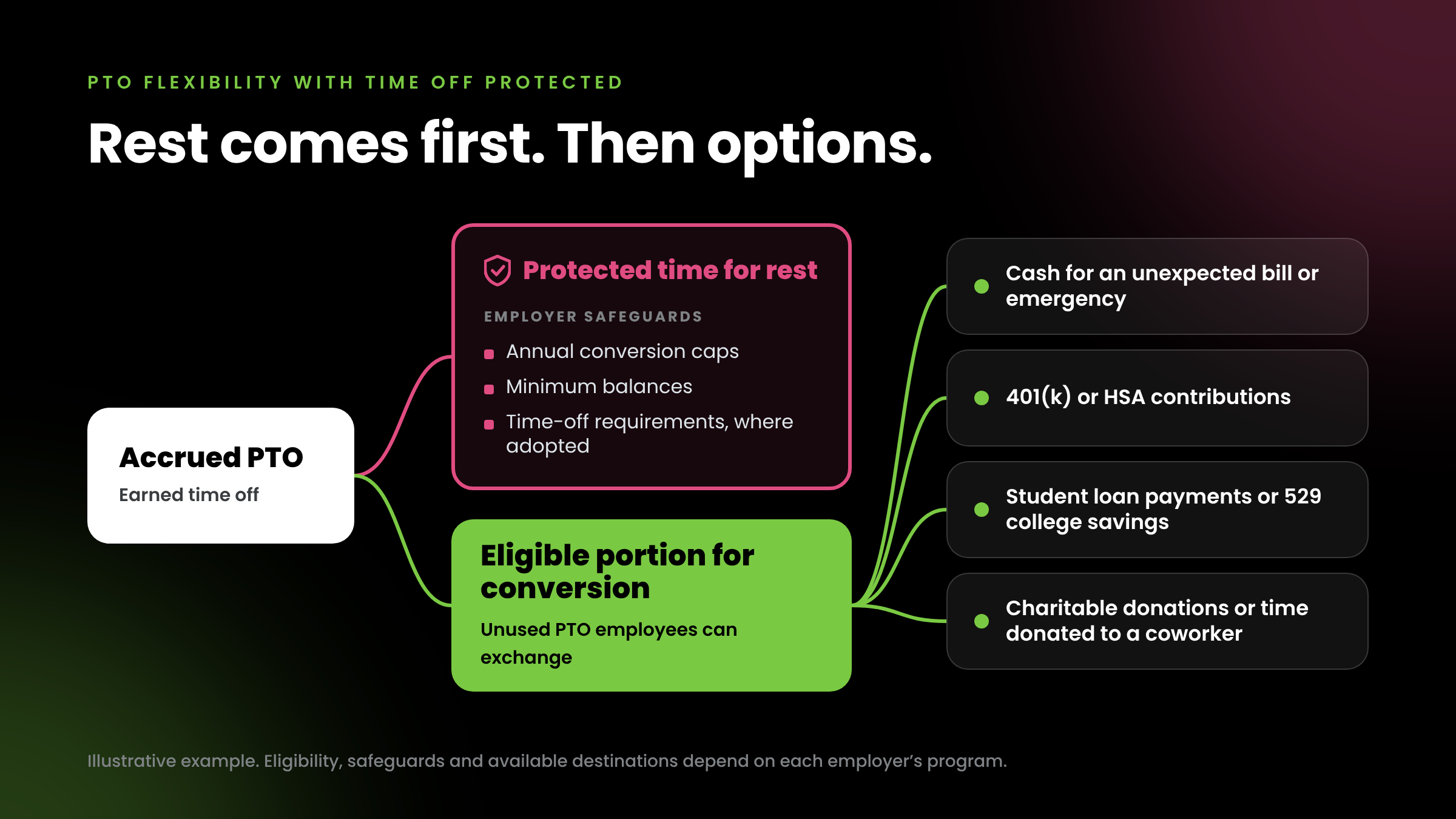
That’s earned compensation. With PTO Exchange, employers let workers convert a portion of their accrued, unused PTO into:
- Cash for an unexpected bill or emergency
- 401(k) or HSA contributions
- Student loan payments or 529 college savings
- Charitable donations, or time donated to a coworker in need
There’s no interest, no fees piling up, and nothing to pay back. It doesn’t drain a retirement balance, and if the employee wants, it can add to one. For someone who spent years watching hardship withdrawals climb, that second point matters a lot to me. The same benefit that keeps someone out of their 401(k) in a bad month can help them put money into it in a good one.
What I have learned working with employers
After five years of helping companies roll this out, here’s my take.
First, financial stress cuts across pay levels far more than most HR teams assume.
Second, the concern I hear most often is “won’t people stop taking vacation?” In my experience, the guardrails handle it. Employers set caps on how many days can be converted each year and minimum balances people must keep, so employees still take the rest they need. Today, a lot of that time just gets forfeited or sits on the books as a liability. I have worked with numerous companies that also require employees to take traditional time off before they are eligible to exchange PTO. Better rested and refreshed employees with less financial stress!
Third, the finance team usually ends up being the biggest supporter. Many of the clients I have worked with understand that PTO is “an accrued expense” the company has already committed to. Turning a growing liability into something employees value is an easy conversation with a CFO. Finance understands we are a tool to help balance the profit and loss statement every year.
A safety net already on the pay stub
I’ve spent my career helping employers build better benefits offerings. The hardest thing to watch was people undoing years of saving to get through one bad month. Employees shouldn’t have to mortgage their retirement or their next paycheck to cover a car repair. For a lot of them, the safety net is already on their pay stub.
To learn more about PTO Exchange, visit https://www.ptoexchange.com/request-a-demo