Do Employees Really Want More Benefits,
or Do They Want More Control?
I've been in the benefits business for more than 40 years. In that time I've watched employers keep adding programs: student loan help, financial wellness, emergency savings accounts, one voluntary benefit after another. Plenty of good ideas. And yet employees are more stressed about money now than they were a few years ago.
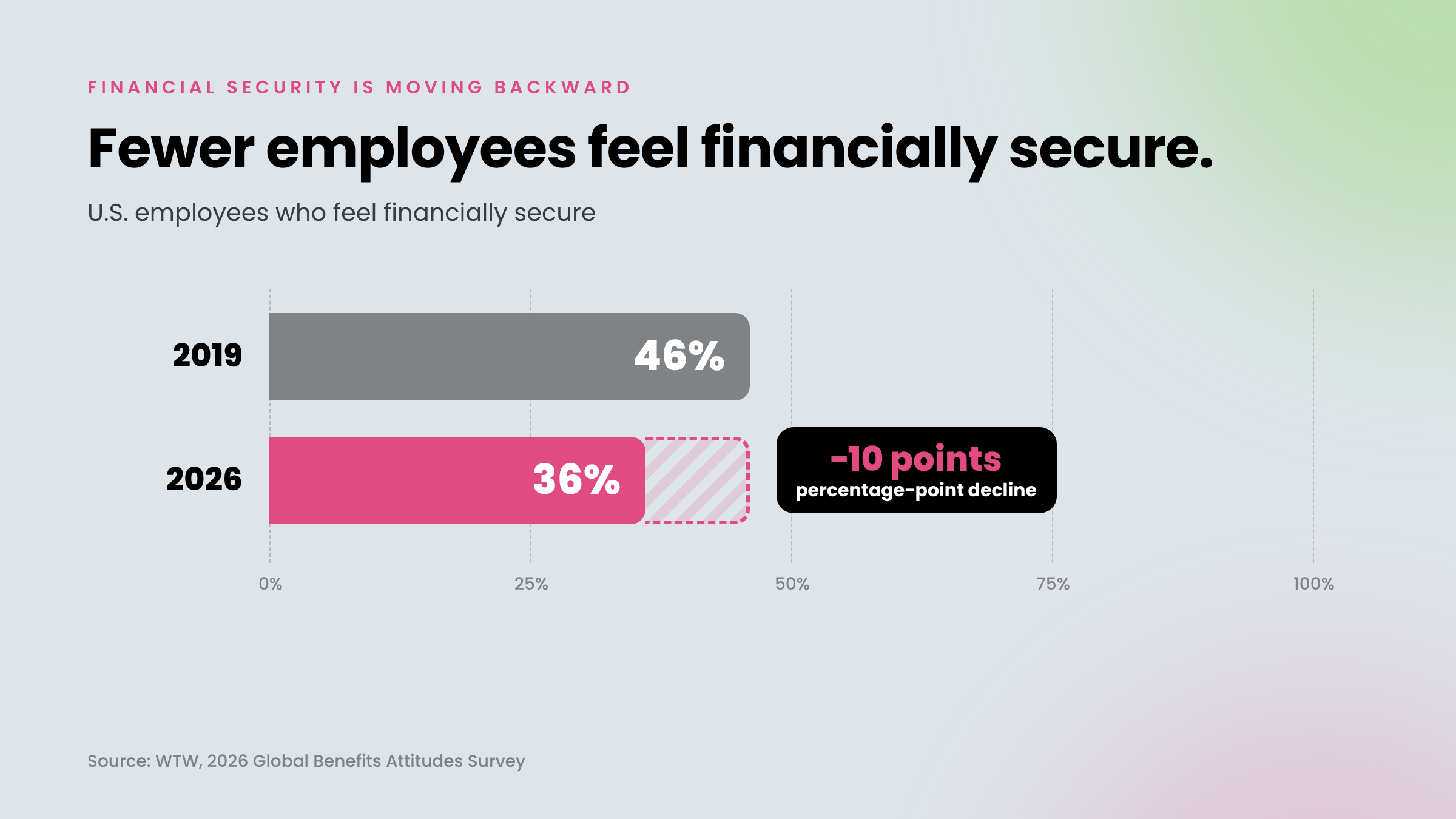
WTW's 2026 Global Benefits Attitudes Survey found only 36% of U.S. employees feel financially secure. In 2019 it was 46%. Over that same stretch, employees said their physical and emotional well-being actually got better. So it's the money piece that's broken.
I don't think the answer is another benefit. I think it's giving people more control over the ones they already have.
Same benefits and different needs
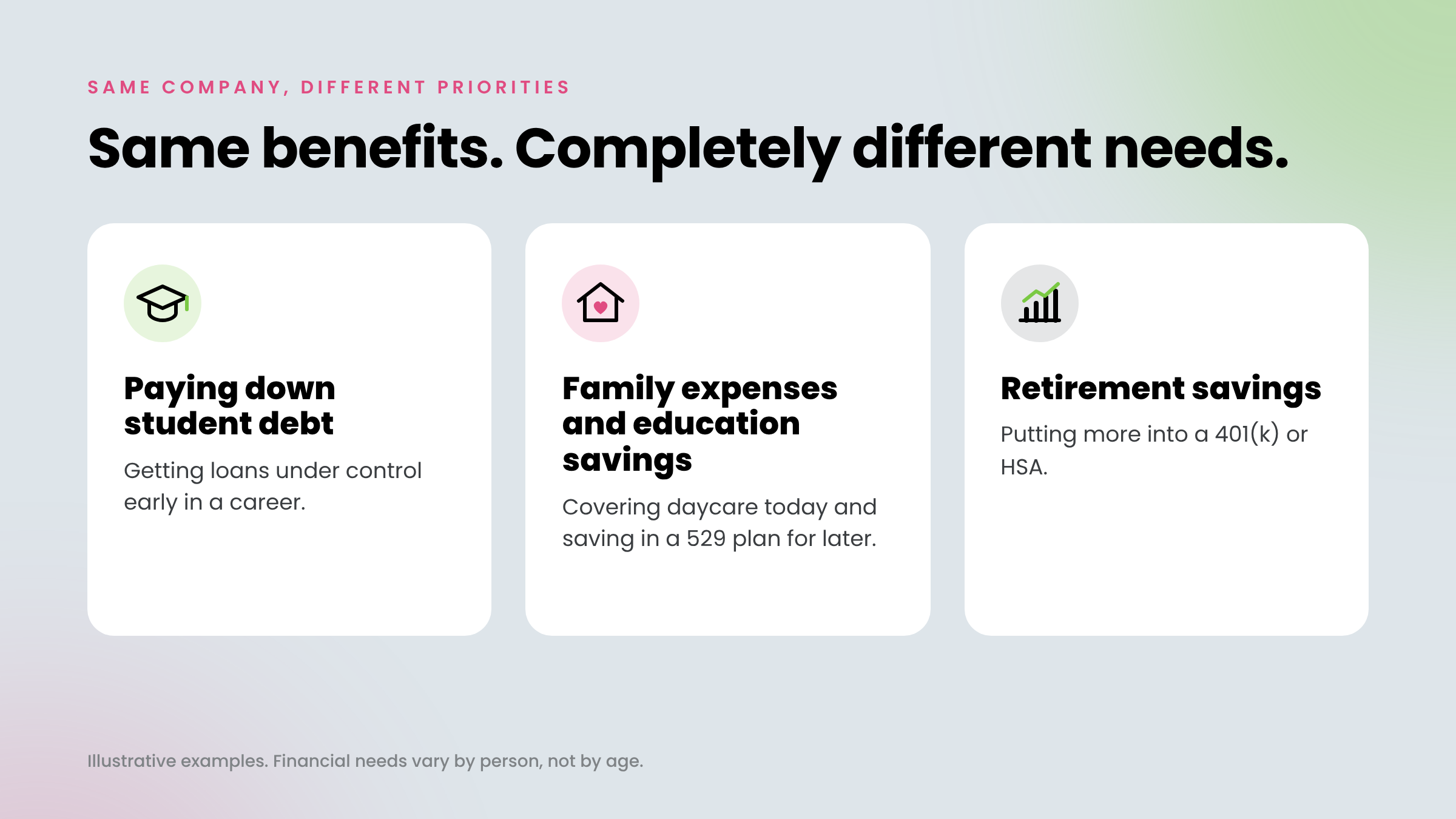
No two employees want the same thing. A 25-year-old may be trying to pay down student loans. A 40-year-old with kids may be worried about daycare and maybe funding a 529 plan. Someone near retirement may want to put more into their 401(k) or HSA.
I'm in that last group. I just turned 65, and if I can afford it, I can contribute up to $32,500 to a 401(k) in 2026 if the plan permits catch-up contributions. But the average American worker makes about $70,000 a year. They're not worried about maxing out their retirement account. They're worried about putting gas in their car and food on the table.
Same company. Same benefits. Completely different needs.
The benefit hiding in plain sight
Most employers treat PTO as a policy question. How many days? How much carries over? What happens to the leftover hours in December? Hardly anyone looks at it as a financial benefit, even though that's exactly what it is. Employees earned it, and it's sitting on the balance sheet as a liability.
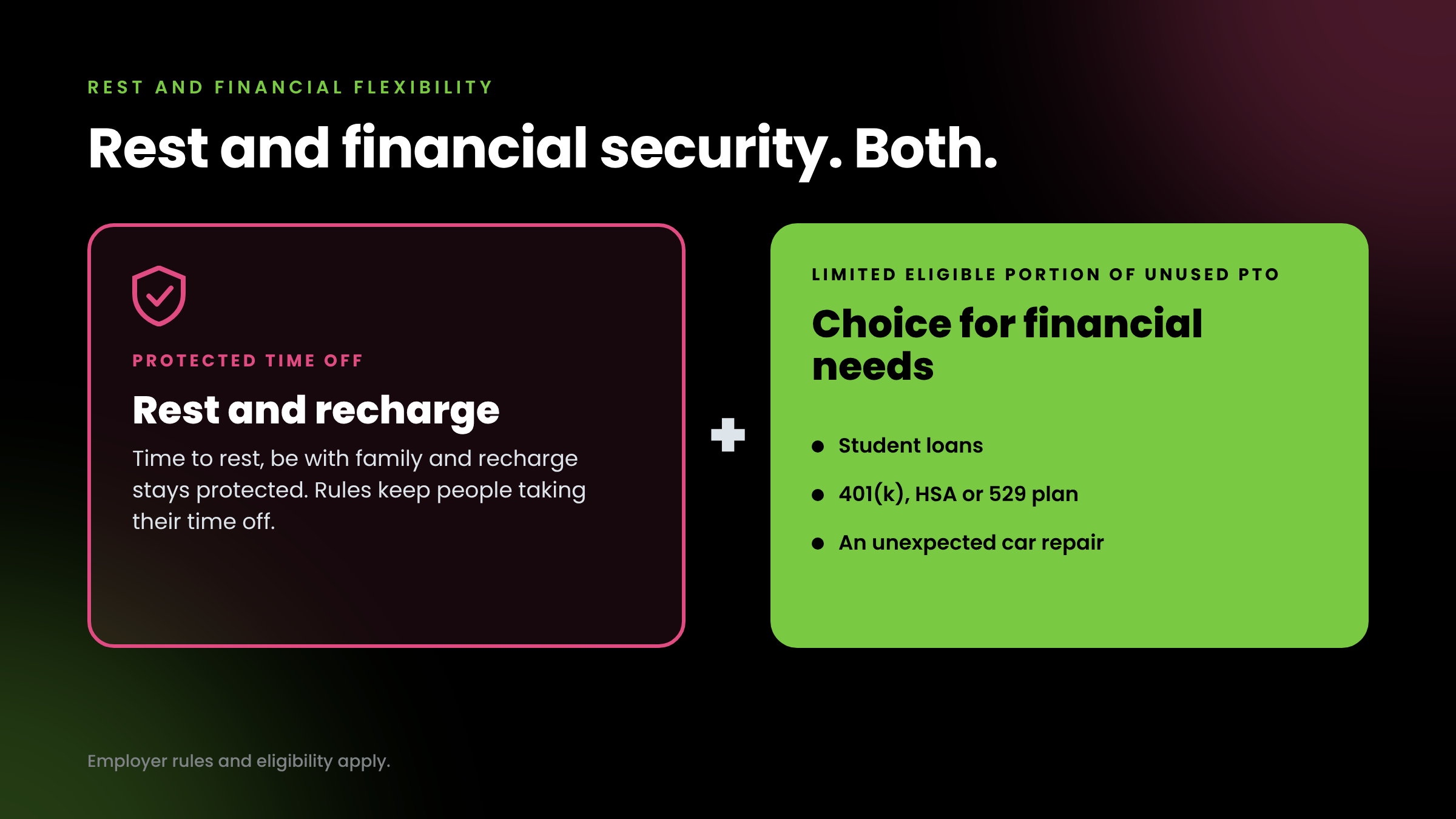
Most employers surveyed already let people roll unused time into next year (81%, according to Gallagher's 2025 Benefits Benchmarks Report). Why stop there? Let employees take part of that unused PTO and put it toward student loans, their 401(k), their HSA, a 529 plan, or a car repair they didn't see coming. The employer isn't adding a new benefit. They're letting people use the one they already earned in a way that actually helps.
Yes, you need the right program rules and compliance. But the idea isn't complicated.
A different conversation for benefits brokers
Your clients are getting hammered at renewal. Gallagher's 2026 Workforce Trends Report found 36% of employers saw health premiums go up 10% or more at their last renewal, and that's after they made plan changes.
In that environment, walking in with another product to buy is a tough sell. Walking in with a way to get more out of something they already pay for is a different conversation, and it's one most brokers never have. PTO almost never comes up in a renewal meeting. It should. It gets HR and finance talking about employee well-being and the balance sheet at the same time.
Sometimes the best thing you can bring a client isn't a new product. It's a new way to look at what they've already got.
Protect time off while offering more choice
One thing I want to be clear about: time off matters. People need to rest, be with their families, and recharge. Nobody should be pushing employees to cash in their vacation instead of taking it. Set the rules so people still take their time, and only a limited portion of unused PTO can be exchanged. Employees need rest and financial security. Both.
That's the thinking behind PTO Exchange. Before adding another benefit, employers and their brokers should ask how much flexibility employees really have with the ones already offered. In my experience, the answer is usually not much.
To learn more about PTO Exchange, visit https://www.ptoexchange.com/request-a-demo