Is Your PTO Policy Stuck in the Past?
I've always thought of paid time off as vacations, long weekends, or a chance to unplug from work. And for a long time, that's exactly how most of us have viewed it. But lately, I've found myself questioning whether we're thinking about PTO too narrowly.
In conversations I'm having with HR leaders across different industries, I'm hearing a common theme: for many employees, taking a vacation isn't necessarily at the top of their priority list. It's not that they don't want or need time away. They just have more pressing concerns.
Employee priorities are changing
According to PwC's 2026 Employee Financial Wellness Survey, 59% of employees surveyed are stressed about their finances, and nearly half say their pay isn't keeping up with the cost of living.
That doesn't surprise me. With the cost of just about everything going up, someone's biggest concern might not be planning their next vacation. It's figuring out how to pay the bills, manage debt, or cover an unexpected expense.
If employees' priorities are changing, shouldn't employers be paying attention to whether the benefits they're offering still meet those needs?
Traditional PTO policies are rigid. Employees earn their hours, but in many cases, they have very little say in what happens to them. Take the time off, roll over what's allowed, or lose what's left. But employees aren't all in the same place financially or personally, yet we continue to treat PTO as though everyone values it in exactly the same way.
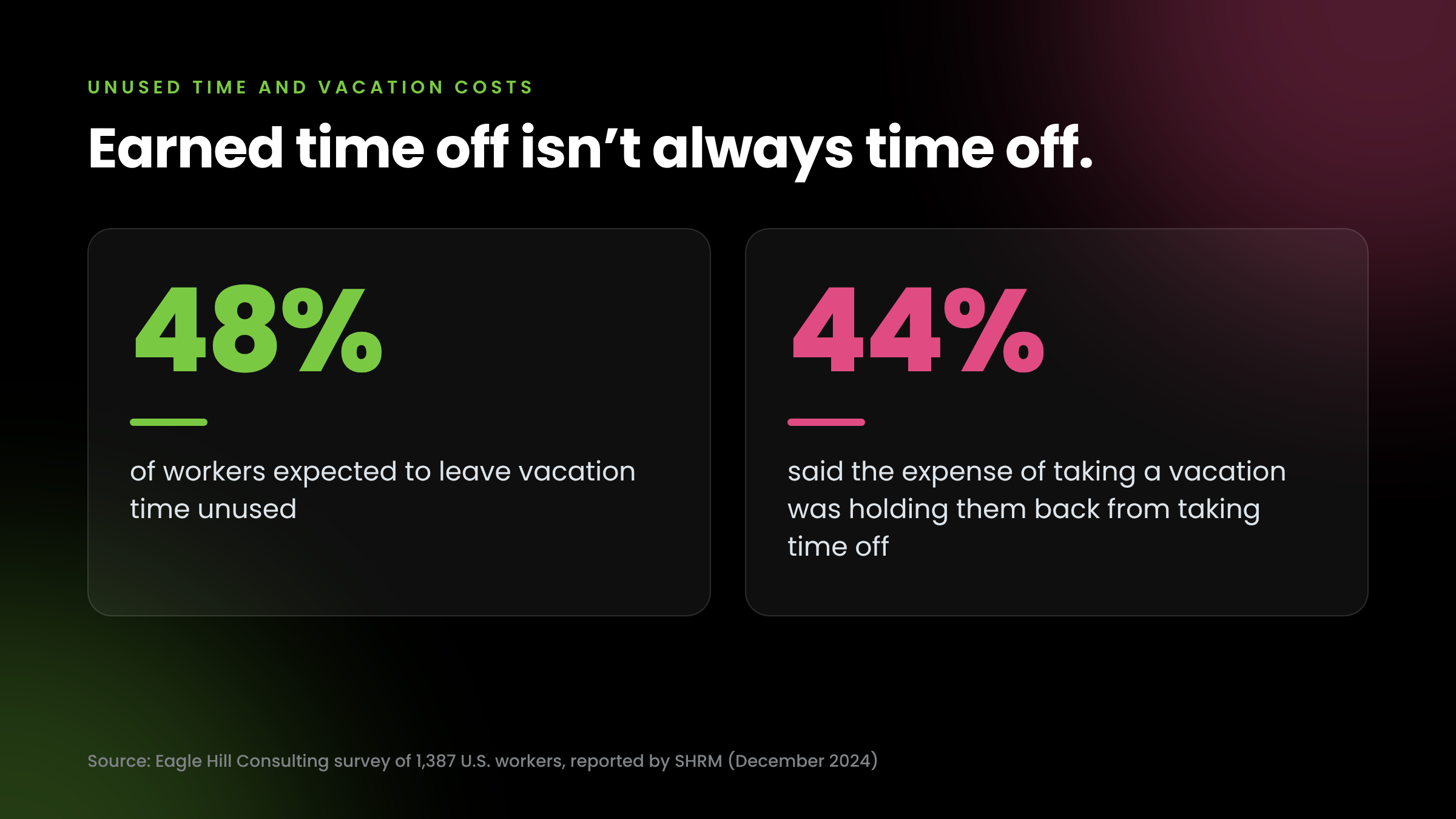
A 2024 Eagle Hill Consulting survey highlighted by SHRM found that 48% of employees expected to leave vacation time unused, and 44% said the expense of taking a vacation was one of the things holding them back. That statistic really stands out to me. We're talking about employees who have earned time away from work but may not even be able to afford to enjoy it.
Make staying more valuable
Here's what I keep coming back to: if an employee is struggling to keep up with the cost of living, what good are 40 hours of unused PTO sitting in a bank?
If you’re looking at employees consistently forfeiting their vacation hours as a financial win, you may be missing the bigger issue.
Companies spend enormous amounts of time and money recruiting, onboarding, training, and developing their employees. Yet, depending on company policy and state law, an employee may have to leave the organization to receive a payout for their unused PTO.
Think about the irony of that. An employee who could really use the financial value of their earned PTO may have more access to it by leaving their job than by staying.
And what happens to the employer? They lose someone they've invested in, along with that experience and institutional knowledge. Now they're back to recruiting, hiring, and training someone new.
I'm not suggesting that employees are leaving their jobs just to cash out their PTO, or that more flexibility would solve every retention challenge. But I do think it's worth asking why leaving an organization can sometimes give employees more options with their earned benefits than staying.
If employers are working so hard to retain their best people, shouldn't we be looking at every opportunity to make staying more valuable?
Offer flexibility while protecting time off
I'm a huge believer in taking time away from work. I take every opportunity I can to travel, visit friends, enjoy long weekends with family, and participate in fitness competitions. Those experiences are what fill my cup, and I wouldn't trade them. But that's me.
What I've come to appreciate through the conversations I'm having is that people have varying priorities. For someone else, knowing they can cover an unexpected car repair or put a little extra money toward retirement might bring them more peace of mind than a few additional days off.
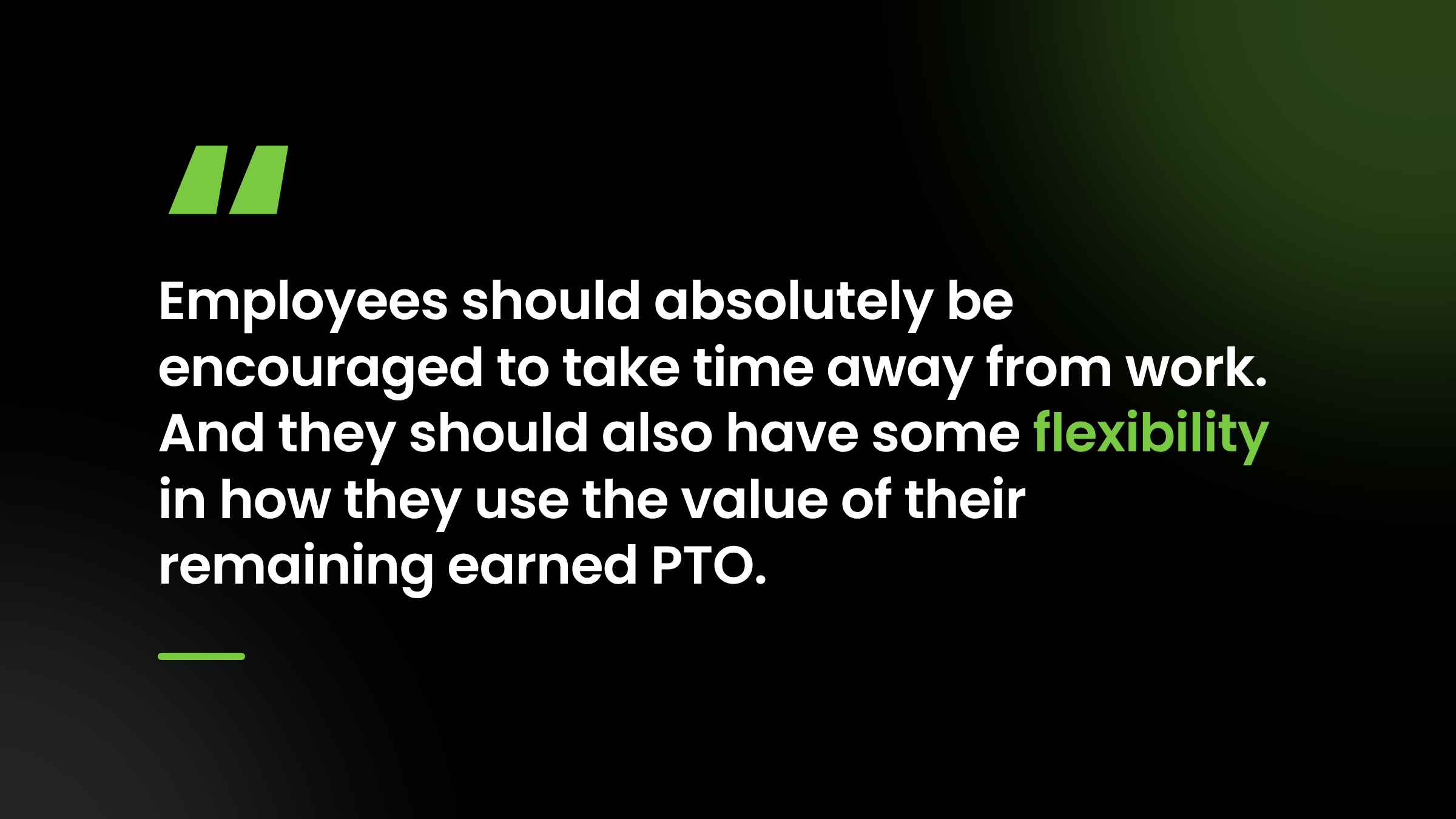
Two things can be true at the same time. Employees should absolutely be encouraged to take time away from work. And they should also have some flexibility in how they use the value of their remaining earned PTO.
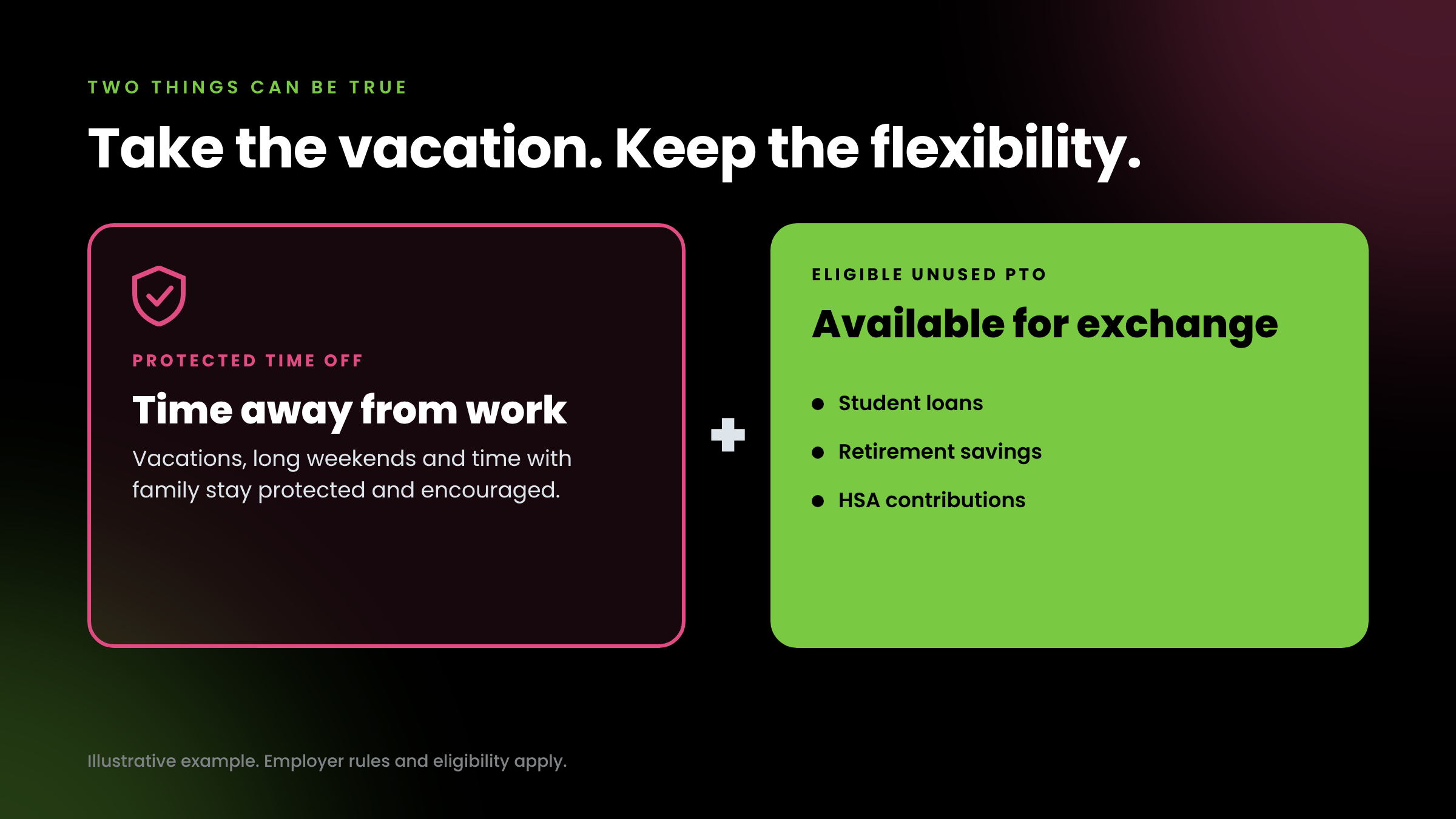
Imagine an employee taking the vacation they need and still being able to put a portion of their eligible unused PTO toward student loans, retirement savings, or their HSA.
And from the employer's perspective, the last thing HR and finance teams are interested in right now is adding another costly benefit. They are looking at the benefits they're already providing and asking whether they could work harder for both the employee and the organization.
That's one of the things I appreciate most about what we're doing at PTO Exchange. We're helping employers rethink a benefit that's been around forever and giving employees value from the time they’ve already earned.
I don't believe there's a one-size-fits-all approach to employee benefits anymore. Organizations that listen to what their employees actually need and are willing to rethink the way they've always done things will be in a much better position to keep their best people.
Retaining great employees isn't just about what you offer them. It's about whether what you're offering actually makes a difference in their lives.
To learn more about PTO Exchange, visit https://www.ptoexchange.com/request-a-demo